
Steel is one of the most widely used materials in construction, manufacturing and fabrication. Among the different types of steel available, mild steel is the most common because it is affordable, easy to work with and versatile.
Many people involved in metal fabrication often ask what MS steel is and why it is used so widely across industries. The term MS stands for mild steel, a type of carbon steel with a relatively low carbon content. Because of its balanced strength and flexibility, it is used in everything from construction structures to everyday metal products.
Understanding what mild steel is, its properties and where it is used helps fabricators, engineers and manufacturers choose the right material for different projects.
What Is Mild Steel?
To understand what mild steel is, it helps to look at its composition. Mild steel is a type of carbon steel that contains 0.05-0.25% carbon. This low carbon content gives mild steel a combination of strength and ductility. It means the metal is strong enough for structural work but still flexible enough to be shaped, bent and welded without cracking. Because of this balance, mild steel is easier to work with compared to high-carbon steels, which are harder but more brittle.
Mild steel is commonly available in different forms such as sheets, plates, pipes, rods and structural sections. These forms are used across industries like construction, automotive manufacturing and industrial fabrication.
Mild Steel Properties
The popularity of mild steel mainly comes from its practical characteristics. Understanding mild steel properties helps explain why it is one of the most widely used engineering materials.
High Ductility
One of the key mild steel properties is its ductility. This means the metal can be stretched, bent or shaped without breaking. Because of this property, mild steel can be easily formed into different shapes during manufacturing.
Good Weldability
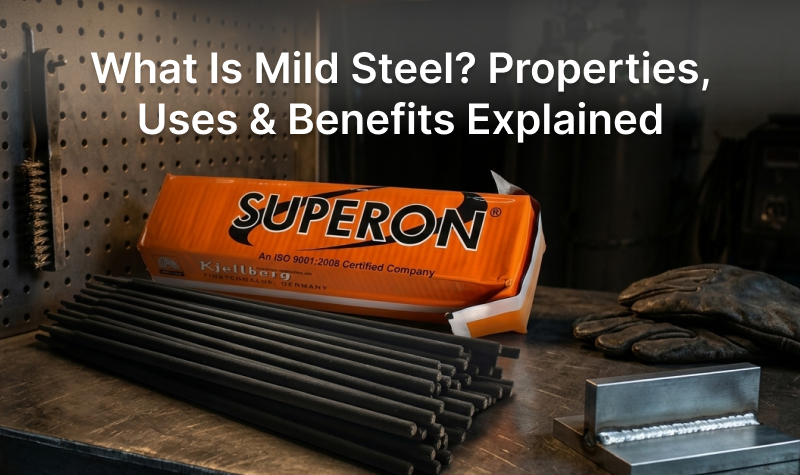
Mild steel is easy to weld compared to many other metals. Its low carbon content reduces the risk of cracking during welding. Fabricators working with welding consumables from Superon Technik often use mild steel in fabrication projects because it allows reliable welding with consistent joint strength.
Machinability
Mild steel can be drilled, cut and machined easily using standard tools. This makes it suitable for manufacturing parts and components that require precision shaping.
Magnetic Properties
Mild steel is magnetic, which makes it useful in electrical applications and industrial equipment.
How Mild Steel Is Manufactured
Mild steel is produced through steel-making processes that control the carbon content in molten iron.
- In steel production, raw materials such as iron ore, coke and limestone are melted in a blast furnace.
- The molten iron is then refined to reduce impurities and adjust the carbon content.
- Once the correct composition is achieved, the metal is cast and rolled into various forms such as bars, plates and sheets.
- These materials are then used in different manufacturing processes depending on their final application.
Mild Steel Uses in Everyday Industries
The wide range of mild steel uses is one of the main reasons it remains popular in engineering and manufacturing.
Construction Industry
One of the most common uses of mild steel is in construction. Structural beams, reinforcement bars and building frameworks often use mild steel because it provides strength while remaining easy to fabricate.
Automotive Manufacturing
Car bodies, chassis components and various vehicle parts are often made from mild steel. Its ability to absorb impact and its relatively low cost make it suitable for automotive manufacturing.
Machinery and Equipment
Industrial machines often include mild steel components such as frames, casings and brackets. These parts require durability but must also be easy to repair or modify when necessary.
Pipelines and Infrastructure
Mild steel pipes and fittings are widely used in water pipelines, gas systems and industrial infrastructure. These applications benefit from the strength and weldability of the material.
Mild Steel Applications in Fabrication
Fabrication workshops rely heavily on mild steel applications because the material is easy to cut, shape and weld.
Gates and Railings
Mild steel is commonly used to produce gates, railings and fences. These products require strength but also need to be shaped into decorative designs.
Furniture Manufacturing
Metal furniture frames often use mild steel tubes or rods. The material provides durability while allowing flexible design options.
Storage Tanks and Containers
Mild steel plates are used to manufacture storage tanks for water, chemicals and industrial materials. These tanks require strong joints and reliable fabrication methods.
Industrial Structures
Factories, warehouses and workshops often use mild steel frameworks because they are cost-effective and strong.
For such fabrication projects, high-quality welding consumables support reliable joint strength and consistent welding performance.
Benefits of Using Mild Steel
The continued popularity of mild steel comes from several practical advantages.
Cost-Effective Material
Mild steel is less expensive compared to many other engineering metals. This makes it ideal for large-scale construction and manufacturing projects.
Easy to Work With
Because of its ductility and machinability, mild steel can be easily cut, welded and formed into different shapes. This reduces manufacturing time and labour costs.
Wide Availability
Mild steel is widely available in different forms and sizes. This makes it convenient for industries that require large volumes of metal.
Recyclable Material
Steel is one of the most recyclable materials in the world. Mild steel can be melted and reused multiple times without losing its properties.
Conclusion
Understanding what mild steel is helps explain why it plays such an important role in construction, manufacturing and fabrication. Its low carbon content provides a balance of strength, flexibility and weldability that makes it easy to work with. The unique properties, wide applications, and versatility of mild steel make it one of the most commonly used metals in the industry.
From construction frameworks and pipelines to machinery parts and metal furniture, mild steel continues to support a wide range of engineering projects. When combined with reliable fabrication materials and welding consumables, fabricators can achieve strong joints and consistent results in their metalworking operations.