 Domestic Market
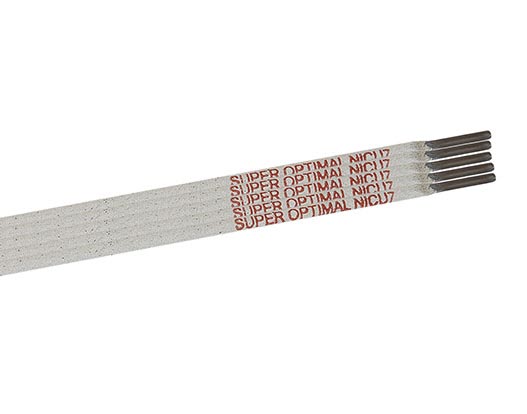
Monel Electrodes are welding electrodes made mainly from nickel and copper. They are designed to give strong welds, resist corrosion, and protect against grain boundary damage. These electrodes work well on both ferrous and non-ferrous materials, especially in areas where the weld needs to withstand corrosive acids such as phosphoric, sulphuric, and hydrofluoric acids.
High Quality Monel Electrode for Corrosion-Resistant Welding
Superon Technik is a reputed Indian manufacturer specialising in high-quality Nickel-Copper Alloy Electrodes used for critical welding applications. These electrodes are developed through advanced research, strict ISO-certified production systems, and strong metallurgical expertise. Superon products are trusted in industries such as marine engineering, shipbuilding, heat exchanger fabrication, chemical processing, and power generation.
Benefits of NiCu-7 Alloy Electrodes
Superon’s nickel copper electrode SUPER OPTIMAL NiCu 7 is designed to deliver superior performance in demanding industrial conditions. These electrodes offer several advantages, making them ideal for joining nickel-copper alloys and dissimilar metals.
- Exceptional corrosion resistance in seawater, brine, acidic environments, and reducing chemicals
- Strong mechanical properties with high tensile strength and excellent elongation
- Smooth, stable arc that allows clean welds without porosity
- Suitable for all position welding, making it convenient for various applications
- Compatible with dissimilar metal welding, including carbon steel, low alloy steel, Monel steels, copper, and copper-nickel alloys
- Wide temperature range performance, from –196°C to +450°C
- Reliable fusion and easy re-striking, ensuring consistent welding quality
These benefits make NiCu electrodes essential for fabricating equipment operated in harsh, corrosive, or high-pressure environments.
Applications of Monel Electrodes Across Industries
Nickel-copper alloys are known for their ability to withstand corrosion and chemical attack. This makes them suitable for a wide range of industries. We provide Monel Electrodes that ensure reliable welding performance in applications where standard electrodes may fail.
-
Marine and offshore structures
Ideal for welding components exposed to saltwater, including ship parts, marine valves, and propeller shafts.
-
Heat exchangers and condensers
Ensures leak-proof and corrosion-resistant joints in chemical processing plants.
-
Pump and valve manufacturing
Used for components that handle corrosive liquids or saltwater.
-
Aerospace and defence applications
Suitable for parts requiring high strength and precise metallurgical bonding.
-
Petrochemical and refinery equipment
Ideal for joining components operating in acidic or chemically aggressive environments.
-
Monel alloy repair and fabrication
Perfect for maintaining Monel 400, R-405, K-500, and similar alloys.
-
Dissimilar metal joining
Helps weld nickel-copper alloys to carbon steel, low alloy steel, and copper.
These applications demonstrate the wide usability of NiCu electrodes in critical industrial operations.
Welding Techniques Compatible with NiCu-7 Electrodes
Our Nickel-Copper Electrodes are versatile and compatible with various welding techniques. They provide stable weld deposit characteristics while maintaining high mechanical properties under diverse operating conditions.
Suitable Welding Processes
-
SMAW (Shielded Metal Arc Welding)
The primary method used with Monel electrodes, offering excellent weld quality and arc stability.
-
TIG Welding (with matching filler rods)
Ideal for achieving precision joints in thin materials.
-
MIG Welding (with corresponding wires)
Used in high-productivity environments requiring continuous welding.
Operating Conditions
- Works with DC+ current, providing deep penetration and consistent weld bead appearance
- Suitable for all welding positions, including vertical and overhead
- Delivers a porosity-free weld deposit, even on marine-grade metals
- Performs reliably in both cryogenic and high-temperature environments
These characteristics make NiCu-7 electrodes dependable for both fabrication and repair work.
Why Choose Superon for Monel Electrodes?
Superon Technik has established itself as a trusted name in the Indian welding industry. Its nickel-copper electrodes stand out due to modern manufacturing practices and strict quality control.
-
Advanced manufacturing technology
Ensures consistent electrode quality and reliable welding performance.
-
ISO-certified production processes
Guarantees compliance with global quality standards.
-
Strong metallurgical knowledge and R&D expertise
Enables development of high-performance electrodes for extreme environments.
-
Excellent mechanical and corrosion-resistant properties
Ensures long-lasting and durable weld deposits.
-
Customer-focused technical support
Provides expert guidance in selecting the right electrode for specific applications.
-
Proven performance across industries
Widely used in marine, power, chemical, and engineering sectors.
Superon continues to innovate and deliver welding solutions aligned with evolving customer needs and industry standards.
-
What are Nickel-Copper Alloy Electrodes used for?These electrodes are used for welding Monel alloys and other nickel-copper materials. They are also suitable for joining dissimilar metals, such as carbon steel, low-alloy steel, copper, and copper-nickel alloys. They provide high corrosion resistance, making them ideal for marine and chemical environments.
-
How do nickel-copper electrodes resist corrosion?Nickel and copper form a stable metallurgical bond that naturally resists rust, seawater corrosion, acidic environments, and reducing chemicals. The weld metal remains strong even under harsh industrial conditions.
-
Can they be used for dissimilar metal welding?Yes, NiCu electrodes are widely used for joining Monel to carbon steel, copper, copper nickel alloys, and other metals. They offer stable arc characteristics that help achieve strong, crack-free fusion.
-
What are the available sizes and specifications?Superon’s SUPER OPTIMAL NiCu 7 electrode matches AWS E NiCu 7 classification. It offers tensile strength of around 490 N per square millimetre and elongation up to 32 per cent. Sizes vary depending on welding requirements.
-
How do I choose the right electrode for my project?Choose based on the base metal type, environment, corrosion level, mechanical strength requirement, and welding position. Our technical team can help you select the best option for marine, chemical, or structural applications.