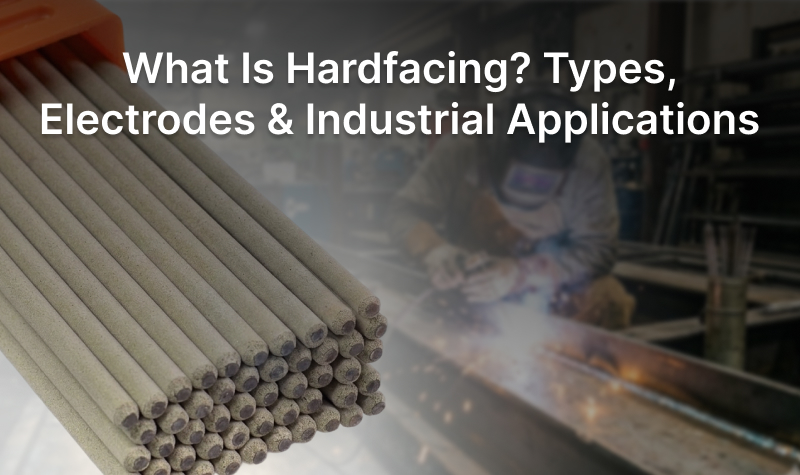
Industrial components often face continuous wear, heat, corrosion and impact, which gradually reduce efficiency and service life. Frequent replacement of damaged parts increases maintenance costs and interrupts productivity. Understanding what is hardfacing helps address this challenge effectively. Hardfacing is a welding technique used to rebuild worn surfaces and protect new components from damage. By applying specialised materials to high-wear areas, industries can improve durability, reduce downtime and maintain consistent performance across demanding fabrication and maintenance operations.
What Is Hardfacing and Why Is It Important?
Hardfacing is a welding process in which a wear-resistant layer is applied to the surface of a metal component to enhance resistance to abrasion, impact and corrosion. Unlike joining processes, the focus is on improving surface durability. It is commonly used to repair worn parts and protect new components before service. The deposited layer is harder than the base metal, helping extend equipment life, reduce maintenance needs, improve performance and minimise downtime. Fabricators trust Superon Technik solutions for reliable results in demanding applications.
Types of Hardfacing and Welding Methods
There are different methods used in the hardfacing process. The choice depends on the size of the component, working conditions and required durability.
Arc Welding Methods
These are the most commonly used techniques in hardfacing.
- Shielded Metal Arc Welding (SMAW): This is a simple and widely used method. It is suitable for repair work and on-site applications. It uses coated electrodes and works well in outdoor conditions.
- Flux-Cored Arc Welding (FCAW): This method offers faster deposition compared to SMAW. It is ideal for medium and large components where productivity is important.
- Submerged Arc Welding (SAW): Used for large industrial components, this method provides high deposition rates and consistent quality. It is often used in automated setups.
- MIG and TIG Welding: MIG is faster and suitable for controlled environments. TIG offers high precision and is used for thin layers or specialised work.
Advanced Hardfacing Methods
Modern industries also use advanced techniques for better performance
- Plasma Transferred Arc (PTA): Provides precise control over the alloy and reduces mixing with the base metal.
- Thermal Spraying: In this method, heated material is sprayed onto the surface. It is useful for coating large areas without affecting the base metal temperature too much.
- Laser Cladding: Uses a laser to deposit material with minimal heat. This helps maintain the original properties of the base metal.
Each method has its own advantages. Choosing the right one is important for achieving the desired results in different hardfacing applications.
Hardfacing Electrodes and Materials
The success of hardfacing largely depends on selecting the right hardfacing electrodes and materials. Different alloys are used based on the type of wear and working conditions.
- Chromium Carbide Alloys: Best for abrasion and erosion resistance. Commonly used in the mining and cement industries.
- Nickel-Based Alloys: Provide good resistance to corrosion and high temperatures. Suitable for chemical and marine environments.
- Cobalt-Based Alloys: Offer excellent performance under heat, impact and corrosion. Used in high-temperature applications.
- Iron-Based Alloys: These are cost-effective and suitable for general wear conditions.
Choosing the Right Electrode
Choosing the right electrode is essential for achieving durable and effective hardfacing results. The selection process depends on key factors that directly impact performance and service life.
- Type of Wear: Identify whether the application involves abrasion, impact or corrosion, as each requires a specific electrode type.
- Base Metal Composition: Ensure compatibility between the electrode and base material for strong bonding.
- Operating Temperature: Consider heat conditions to maintain electrode performance in service.
- Industry Requirements: Evaluate specific working conditions and application needs before selection.
Using the correct electrode ensures strong bonding, improved surface protection and longer component life. Many professionals trust Superon Technik consumables for consistent quality and reliable performance in demanding industrial environments.
Step-by-Step Hardfacing Process
Following a proper hardfacing process is important to achieve durable and defect-free results.
1. Surface Preparation
The surface must be clean before starting. Remove oil, grease, rust and old coatings. Any contamination can weaken the weld.
2. Preheating
Preheating may be required depending on the base metal. It helps reduce stress and prevents cracking during welding.
3. Depositing the Hardfacing Layer
Apply the weld material using the selected method. Maintain proper heat, speed and technique to control dilution with the base metal.
4. Multi-Layer Application
In many cases, multiple layers are applied. A buffer layer may be used first, followed by the final wear-resistant layer.
5. Cooling and Inspection
Allow the component to cool slowly. Rapid cooling can cause cracks. After cooling, inspect the surface for defects and ensure proper thickness.
Following these steps carefully improves performance and ensures long-lasting results in different hardfacing applications.
Industrial Applications of Hardfacing
Hardfacing is widely used across industries where components face continuous wear and stress
- Mining Industry: Used on crushers, hammers and conveyor parts that face heavy abrasion.
- Cement Industry: Applied to rollers, fans and grinding equipment to improve durability.
- Power Plants: Used for boilers, turbines and ash handling equipment exposed to heat and corrosion.
- Steel Industry: Protects rollers, guides and other components exposed to high temperatures and pressure.
- Sugar Industry: Used on crushers and blades that handle fibrous materials and experience constant wear.
These hardfacing applications help industries reduce maintenance costs and improve productivity. Instead of replacing expensive parts, they can extend their life using proper hardfacing techniques.
Conclusion
Understanding hardfacing helps industries manage wear, extend equipment life and improve operational efficiency. It is more than a repair technique; it is a preventive approach that supports reliability and productivity. Selecting suitable hardfacing electrodes, applying the correct process and choosing the right method enable strong and durable results across demanding applications. From mining to manufacturing, hardfacing reduces downtime and maintenance costs. With the right support, businesses can achieve consistent performance and long-term protection for critical components.