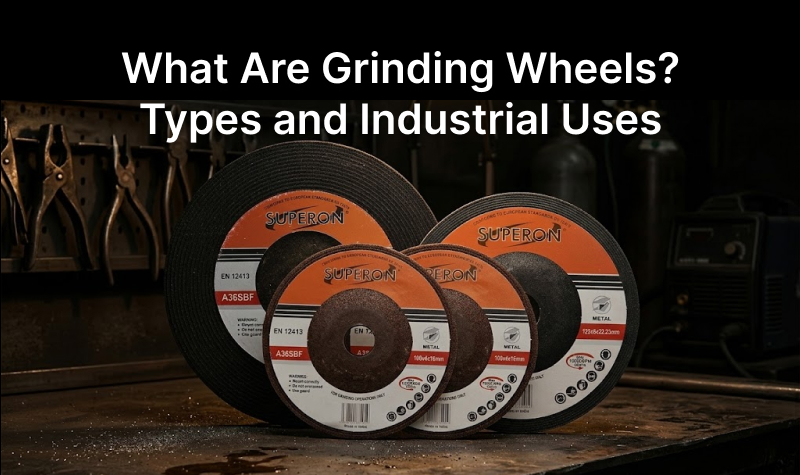
In metalworking and fabrication, precision finishing is just as important as cutting or welding. That is where grinding wheels come in. These tools remove small amounts of material from a surface to achieve the required shape, size or finish. If you have ever seen sparks flying in a workshop, chances are a grinding wheel was doing the work. From sharpening tools to finishing steel components, grinding wheels are widely used across manufacturing industries.
This guide explains what a grinding wheel is, how it works, the types of grinding wheels, their specifications and how industries select the right one for the job.
What is a Grinding Wheel?
A grinding wheel is a circular cutting tool made from abrasive particles bonded together. Each abrasive grain acts like a tiny cutting edge that removes material from a workpiece.
When the wheel rotates at high speed, the abrasive particles grind away metal, stone or other materials with controlled precision. Unlike traditional cutting tools that remove large chunks of material, grinding wheels perform fine finishing operations.
A grinding wheel consists of three main parts:
- Abrasive grains: These are the cutting particles that perform the grinding action. Common materials include aluminium oxide and silicon carbide.
- Bonding material: The bond holds abrasive grains together and determines the wheel's strength and wear rate.
- Pores or voids: Small spaces between grains help remove chips and allow cooling during grinding.
Because of this structure, grinding wheels can cut hard materials while maintaining accuracy and surface quality.
Types of Grinding Wheels
There are many different types of grinding wheels designed for specific grinding tasks. The shape of the wheel and the abrasive material both affect performance. Below are some common types of grinding wheels used in workshops and factories.
Straight Grinding Wheel
This is the most common wheel used on bench grinders and cylindrical grinding machines. It has a flat surface and is well-suited for general grinding tasks, such as surface finishing and tool sharpening.
Cylinder Wheel
Cylinder wheels are large wheels used primarily in vertical- or horizontal-spindle grinding machines. They grind flat surfaces and are common in heavy industrial operations.
Tapered Grinding Wheel
These wheels have a tapered edge and are designed for grinding gear teeth or thread surfaces. Their shape allows access to narrow areas that flat wheels cannot reach.
Straight Cup Wheel
Cup wheels look like a small bowl. They are often used for tool grinding and surface grinding applications.
Dish Grinding Wheel
Dish wheels are commonly used to sharpen cutting tools such as milling cutters or drills. Their shape allows precise grinding angles.
Saucer Grinding Wheel
Saucer wheels are used for sharpening saw blades and gear cutters. Because of their shape, they provide excellent edge access.
These examples show the different types of wheels with names commonly used in grinding operations.
Grinding Disc Types
In addition to grinding wheels used on machines, handheld grinders use grinding discs. These are thinner and designed for portable power tools. Common grinding disc types include:
Grinding Discs
Used for removing welds, smoothing surfaces and preparing metal before finishing.
Flap Discs
Made with overlapping abrasive flaps. They grind and polish at the same time.
Cutting Discs
These thin discs are designed to slice through metal or stone rather than grind.
Understanding cutting wheel types helps operators select the correct disc for cutting pipes, rods or sheets.
Different Types of Abrasive Wheels
Grinding wheels are also classified based on the abrasive material used. These different types of abrasive wheels are chosen depending on the material being processed.
Aluminium Oxide Wheels
These are widely used for grinding steel and ferrous metals. They are tough and durable, which makes them suitable for heavy grinding work.
Silicon Carbide Wheels
Silicon carbide wheels are harder but more brittle. They work well for grinding cast iron, stone and non-ferrous metals.
Ceramic Abrasive Wheels
These modern wheels offer high durability and cutting speed. They are used in advanced manufacturing environments.
Diamond Wheels
Diamond wheels are extremely hard and used to grind very hard materials, such as carbide tools and ceramics.
Grinding Wheel Specification
Each grinding wheel comes with a specification code that describes its properties. Understanding grinding wheel specifications helps technicians choose the correct wheel for a task. A grinding wheel specification includes:
- Abrasive type: Indicates the cutting material, such as aluminium oxide or silicon carbide.
- Grain size: Defines how coarse or fine the abrasive particles are. Larger grains remove material quickly while smaller grains produce a smoother finish.
- Grade: Shows how strongly the abrasive grains are held by the bond.
- Structure: Refers to the spacing between abrasive grains.
- Bond type: Specifies the bonding material used to hold grains together.
These parameters determine how aggressively a wheel cuts and how long it lasts.
Types of Grinding Process
Grinding is not a single operation. There are several types of grinding processes used in manufacturing.
Surface Grinding
Surface grinding creates a smooth, flat surface on metal parts. It is commonly used for precision components.
Cylindrical Grinding
This process grinds the outside diameter of cylindrical objects such as shafts.
Internal Grinding
Internal grinding finishes the inside surface of holes or tubes.
Tool and Cutter Grinding
Used to sharpen milling cutters, drills and other cutting tools.
Centerless Grinding
In this process, the workpiece is supported between two rotating wheels rather than held by a spindle.
Each grinding method requires different types of grinding wheels and machine setups.
Different Types of Grinding Machines
Grinding wheels are mounted on machines designed for specific operations. Understanding different types of grinding machines helps in choosing the right wheel.
Common grinding machines include:
- Bench grinder: Used for sharpening tools and light grinding.
- Surface grinder: Produces flat surfaces with high precision.
- Cylindrical grinder: Used to grind round parts, such as shafts.
- Centerless grinder: Ideal for mass-producing cylindrical components.
- Tool and cutter grinder: A specialised machine for sharpening tools.
Each machine uses particular grinding disc types or wheel shapes depending on the operation.
Grinding Wheel Selection
Choosing the correct wheel is important for safety, performance and efficiency. Proper grinding wheel selection depends on several factors.
Material of the Workpiece:
Hard materials require tougher abrasives while softer metals need sharper grains.
Required Surface Finish
Fine-grain wheels produce smoother finishes while coarse-grain wheels remove material faster.
Grinding Speed
Different wheels are designed for specific operating speeds.
Type of Grinding Machine
The machine and spindle design determine the wheel size and shape.
Cooling Requirements
Some grinding operations generate heat. Wheels with open structures help with cooling and chip removal.
Selecting the correct grinding wheel improves productivity and reduces tool wear.
Industrial Uses of Grinding Wheels
Grinding wheels are important across many industries. That includes:
Metal Fabrication
They smooth welds, remove excess metal and prepare surfaces for finishing.
Tool Manufacturing
Grinding wheels shape and sharpen cutting tools used in machining.
Automotive Industry
Components such as crankshafts, gears and engine parts require precision grinding.
Construction and Stone Processing
Abrasive wheels are used to grind concrete, marble and granite.
Stainless Steel Fabrication
Grinding wheels are often used to finish stainless steel structures, railings and kitchen equipment. After welding with Superon Technik Welding Wire, grinding helps achieve a smooth surface and a professional finish.
Conclusion
Understanding what a grinding wheel is and how it works is important for anyone involved in metalworking, fabrication or manufacturing.
Grinding wheels are versatile tools that shape, finish and sharpen materials with high precision. From different types of abrasive wheels to specialised grinding disc types, each wheel is designed for a specific task.
The right wheel, combined with the correct machine and grinding process, can significantly improve surface quality, productivity and safety.
In industries where finishing and precision matter as much as fabrication itself, grinding wheels remain one of the most important tools in modern manufacturing.
Precision finishing starts with the right tools. Whether you are smoothing heavy welds or sharpening delicate cutting edges, Superon Technik provides high-performance abrasive solutions engineered for durability and accuracy.