Strong welds start before the arc is struck. Proper joint preparation and design determine how well the weld metal penetrates, the quality of fusion and the load the joint can withstand. That is why groove welding is widely used in structural fabrication, pipeline construction, pressure vessel construction, heavy equipment and other demanding industrial applications.
Superon Technik works closely with welders who require reliable joints in real-world conditions. Understanding what is a groove weld, how groove welding works, how to interpret groove symbols and the common types of groove welds helps welders select the correct groove for any job.
What is a Groove Weld?
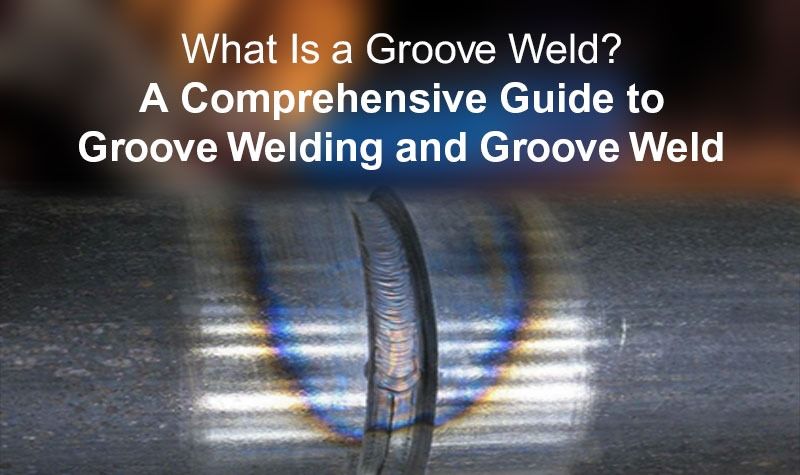
A groove weld is created in a prepared opening between two metal parts. This opening, called a groove, is formed by shaping the edges of one or both workpieces. The groove allows molten metal and filler material to fully enter the joint, producing higher-strength welds than simpler joints, especially in thicker materials.
Groove welds are typically used when:
- Full penetration is required
- The joint must carry heavy loads
- The weld must be structurally sound through the material thickness
- Thick plates or pipes need strong bonding
Understanding Groove Weld Symbols
In fabrication drawings, groove welds are represented with standard welding symbols. The American Welding Society (AWS) provides a system for designating weld type, size and other specifications.
A groove symbol communicates to the welder:
- The required groove shape
- Whether the weld is on the arrow side or the other side
- Groove or weld dimensions
- Full penetration requirements
- Additional details like root opening, bevel angle and backing
Accurate interpretation is essential because groove welds depend heavily on proper joint preparation. Incorrect groove angles or root gaps can compromise penetration and fusion.
Key Factors in Groove Design
Selecting the right groove involves considering several critical factors:
- Material Thickness – Thin material often uses square grooves or small bevels. Thick material may require V, U, J or double grooves to achieve full penetration without excessive filler metal.
- Welding Position – Flat-position welding allows wider grooves and higher deposition. Vertical and overhead positions often need smaller grooves and controlled puddles.
- Welding Process – Different processes suit specific groove shapes. MIG welding works well for continuous straight grooves, TIG is ideal for precision work and controlled root passes and stick welding is versatile for deeper penetration joints.
- Joint Access – Limited access may require a single bevel or J groove.
- Strength Requirements – High-load joints may need full-penetration groove welds, multi-pass welding and strict fit-up control.
Common Groove Weld Types
Groove welds come in a variety of shapes, each designed to meet specific structural and fabrication requirements. Selecting the right groove type ensures proper penetration, efficient filler usage and strong, durable joints. Understanding the advantages and limitations of each groove weld type helps welders make informed choices for different material thicknesses, joint positions and load-bearing applications.
1) Square Groove Weld: Two flat edges with little or no bevel, ideal for thin material.
Advantages: simple preparation, low distortion, minimal filler use
Limitations: not suitable for thick materials; penetration depends on root gap and control
2) V Groove Weld: Edges are bevelled to form a V shape, common in plate fabrication and structural jobs.
Advantages: strong joint, usable in multiple positions
Limitations: requires more filler; correctthe bevel angle and root face critical
3) Double V Groove Weld: Prepared on both sides for thick plates.
Advantages: reduces filler metal use, balances shrinkage, limits distortion
Limitations: requires access to both sides, more prep and welding time
4) Single Bevel Groove Weld: One edge is bevelled, used when one side is inaccessible.
Advantages: deep penetration from one side
Limitations: multiple passes often required; precise fit-up necessary
5) J Groove Weld: J-shaped preparation on one side, suitable for thick materials where filler reduction is desired.
Advantages: less filler, deep penetration
Limitations: higher prep cost, requires special machining
6) U Groove Weld: Concave shape for thick plates or pressure components.
Advantages: deep penetration, good weld pool control, strong joints
Limitations: difficult preparation, multi-pass welding is usually needed
7) Flare Bevel Groove Weld: Curved surface meets a flat surface (e.g., pipe to plate).
Advantages: minimal prep, strong weld on correct thickness
Limitations: mainly for thick sections; heat deflection is possible
8) Flare V Groove Weld: Two curved surfaces meet, forming a natural V.
Advantages: better access for weld deposition, usable in multiple positions
Limitations: skill required to control the puddle; distortion risk on thick, curved parts
By familiarising themselves with the characteristics of square, V, double V, bevel, J, U and flare groove welds, welders can optimise joint preparation, minimise filler consumption and achieve consistent, high-quality results across diverse fabrication and repair projects. Choosing the appropriate groove weld type is a key step in ensuring long-lasting structural integrity.
Welding Processes for Groove Welds
Choosing the right welding process is as important as selecting the correct groove type. Each welding method offers unique advantages and limitations depending on material thickness, joint configuration and production environment. Understanding how MIG, TIG and stick welding interact with different groove designs helps welders achieve consistent penetration:
- MIG Welding – Efficient for straight, continuous joints like V grooves and flare bevel grooves. Common in production settings.
- TIG Welding – Offers precision control for root passes, thin sections and clean finishes. Ideal for square grooves, J grooves and controlled welds.
- Stick Welding – Versatile and robust, suitable for V and U grooves where penetration and joint strength are critical.
Superon Technik observes groove welding being successfully performed using both stick and MIG processes, depending on site conditions and productivity requirements.
Conclusion
Groove welding ensures high-strength, deep-penetration welds, especially in structural fabrication and heavy industrial applications. A groove weld is formed in a prepared opening that allows complete fusion and strong load-bearing joints. By understanding groove weld types, symbols and preparation requirements, welders can select the right groove for each task and achieve reliable, consistent results.
Superon Technik provides expert guidance and welding consumables that support critical groove welding, helping professionals achieve durable performance across fabrication, construction and repair operations.