
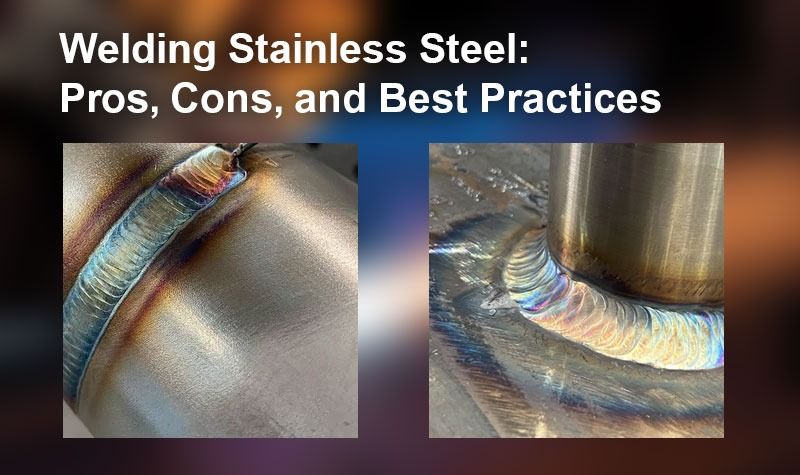
Stainless steel is a widely used material in industries ranging from food processing, pharmaceuticals and chemical handling to construction, automotive and architectural applications. Its combination of strength, corrosion resistance and aesthetic appeal makes it an ideal choice for demanding environments. However, stainless welding requires careful consideration, as the material behaves differently from carbon steel or aluminium. Understanding the advantages, challenges and practices ensures that welded joints are durable, corrosion-resistant and visually appealing.
Can You Weld Stainless Steel?
Yes, stainless steel can be welded, but it is important to select the right process, filler material and techniques. Stainless steel contains higher levels of chromium and often nickel or molybdenum, which give it corrosion resistance. These elements also affect the metal’s response to heat, making it more prone to distortion, warpingor cracking if handled improperly. When asking “can you weld stainless steel?”, the answer is affirmative, provided the correct welding parameters and filler rods are used.
Common stainless steel grades for welding include 304, 304L, 316 and 316L. Grade 304 is widely used for general fabrication, while 316 is preferred in marine or chemical environments due to superior resistance to chlorides and aggressive conditions. Knowing the material grade is the first step in planning a successful weld.
Advantages of Stainless Welding
Welding stainless steel offers several benefits:
- Corrosion Resistance: Welds can maintain the chromium oxide layer that protects the base metal, ensuring resistance to rust and chemical attack.
- Strength and Durability: Proper welding preserves mechanical strength, making joints reliable under heavy loads and thermal cycles.
- Aesthetic Appearance: With controlled heat input and correct filler selection, stainless welds can be smooth, uniform and visually appealing, important for architectural and decorative work.
- Versatility: Stainless steel can be welded in thin sheets or thick plates, making it suitable for pipelines, tanks, kitchen equipment and structural frameworks.
These benefits make stainless welding a key process in fabrication, maintenance and repair tasks across diverse industries.
Challenges and Cons
While stainless steel is highly desirable, it presents certain challenges during welding:
- Distortion and Warping: Stainless steel expands and contracts more than carbon steel under heat, which can lead to warping if heat input is not controlled.
- Cracking: Incorrect filler selection or high-carbon variants can result in hot cracking or intergranular corrosion along the weld.
- Discolouration: Excessive heat can cause colour changes on the weld surface, affecting aesthetics and corrosion resistance.
- Filler Mismatch: Using the wrong rod can compromise strength and corrosion resistance, especially in chemically aggressive environments.
Understanding these limitations is essential when planning how to weld stainless steel, ensuring that joints perform reliably in service.
Selecting the Right Rod for Stainless Steel Welding
The choice of filler rod is critical for weld quality, strength and corrosion resistance. The most common rods include:
- 308L Filler Rod: Ideal for welding 304 stainless steel and similar grades. Offers good corrosion resistance and low carbon content to reduce carbide precipitation. Suitable for general fabrication.
- 316L Filler Rod: Used with 316 stainless steel in marine or chemical environments. Provides superior resistance to chlorides and aggressive conditions.
- 309 Filler Rod: Designed for joining stainless steel to carbon steel or as a buffer layer. Ensures good fusion with dissimilar metals and prevents cracking.
Correct rod selection depends on the stainless steel grade, base metal and service environment. Following code specifications and application requirements ensures the weld meets mechanical and corrosion-resistance standards.
How to Weld Stainless Steel
Successful stainless welding depends on choosing the right process, controlling heat inputand maintaining proper shielding. Common welding methods include:
TIG Welding
Tungsten Inert Gas (TIG) welding is ideal for thin materials, precise jointsand applications requiring minimal spatter. TIG allows full control over heat and filler addition, making it suitable for visible or critical stainless steel welds.
MIG Welding
Metal Inert Gas (MIG) welding is faster than TIG and is suitable for thicker sections or repetitive work. It maintains good weld quality with proper shielding gas, usually argon or argon‑CO₂ mixtures. MIG is effective for both structural and fabrication projects where speed and consistency are important.
Stick Welding
Shielded Metal Arc Welding (SMAW or stick) is versatile for stainless steel, especially in field conditions where accessibility is limited. Special stainless electrodes help control cracking, provide strong joints and maintain corrosion resistance.
Best Practices for Stainless Steel Welding
Following these best practices improves weld quality and reduces post-weld issues:
- Clean Base Metal: Remove oils, grease and contaminants to prevent porosity and weak joints.
- Control Heat Input: Limit excessive heat to reduce distortion and colour changes. Preheating is generally unnecessary for low-carbon stainless but may be required for thick sections.
- Select Correct Filler Rod: Always match the rod to the base metal grade and service environment.
- Use Proper Shielding Gas: Argon or argon-based mixtures protect the weld pool from oxidation and contamination.
- Monitor Interpass Temperature: For multi-pass welds, maintain controlled temperatures to prevent cracking or warping.
- Clean Between Passes: Remove slag and oxides to improve fusion and minimise inclusions.
- Post-Weld Finishing: Brushing, grindingor passivation restores corrosion resistance and improves surface aesthetics.
Applications of Stainless Steel Welding
Stainless welding is commonly used for:
- Food-grade and pharmaceutical equipment
- Chemical handling systems and tanks
- Marine structures and piping
- Architectural and decorative applications
- Automotive and aerospace components
- Thin sheet fabrication requires precision
Choosing the right process and filler rod ensures strong, corrosion-resistant welds in these critical applications.
Conclusion
Stainless welding offers strong, corrosion-resistant, long-life joints, but stainless needs discipline. Can you weld stainless steel? Yes, but success depends on thorough preparation, controlled heat input, proper shielding and appropriate consumables. Once the basics of welding stainless steel are mastered, weld quality and appearance improve significantly.
For reliable stainless consumables and consistent weld performance, Superon Technik supports welders with solutions designed for demanding fabrication and site conditions.