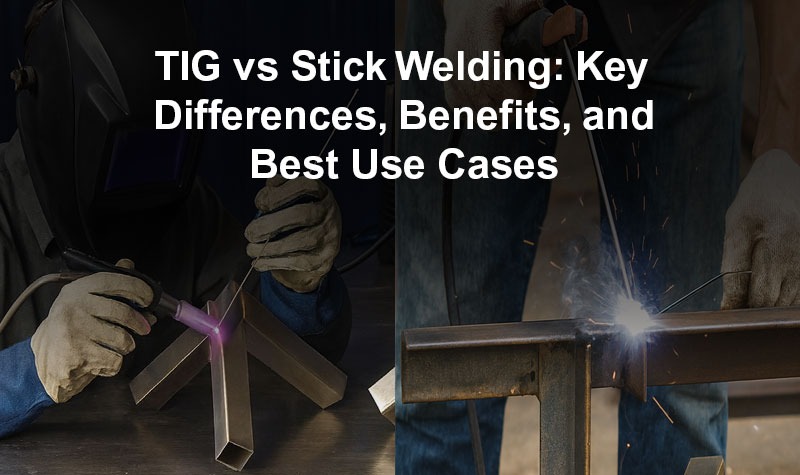
Choosing the right welding method is a critical decision that directly affects weld strength, finish and long-term performance. Among the most commonly used techniques, TIG welding and Stick welding are often compared because each serves a distinct purpose. The difference between TIG vs arc welding is not about which method is better, but about which one is more suitable for a specific application. Factors such as material type, thickness, working environment and required precision all influence this choice. Understanding the key differences, benefits and best use cases of TIG and Stick welding helps ensure reliable welds and more efficient project outcomes.
What Is TIG Welding
TIG welding, also known as Tungsten Inert Gas welding, uses a non-consumable tungsten electrode to create the arc. An inert shielding gas, usually argon, protects the weld area from contamination. Filler metal is added separately when required, giving the welder a high level of control over the weld pool.
This method is known for producing clean, precise welds with excellent finish. It is especially suited for thin metals such as stainless steel, aluminium and non-ferrous alloys. In practical terms, TIG welding vs arc welding offers greater precision and visual quality, making TIG the preferred choice for applications where appearance and accuracy are critical.
Superon Technik provides TIG electrodes that deliver stable arc performance, consistent heat control and low contamination. These features help welders achieve smooth weld beads and reliable results in precision and industrial welding applications.
What Is Stick Welding
Stick welding, also called Shielded Metal Arc Welding, uses a consumable electrode coated with flux. As the electrode melts, it forms the weld and the flux creates a protective slag that shields the molten metal from air. This process is widely used because of its simplicity and versatility.
Stick welding performs well in outdoor conditions, on dirty or rusty surfaces, and in environments with wind or moisture. Compared to processes like MIG welding vs arc welding, Stick welding remains easier to set up and more portable, making it ideal for on-site and repair work.
Superon Technik provides Stick electrodes designed for strong joints, low spatter and consistent weld quality. These electrodes are commonly used in structural welding and heavy fabrication, where durability and reliability are essential.
Key Differences Between TIG and Stick Welding
The main differences between TIG and Stick welding relate to precision, working conditions, material type and equipment requirements.
|
Aspect |
TIG Welding |
Stick Welding |
|
Control and Precision |
Provides high precision and clean welds. Better heat control makes it suitable for thin materials and detailed work. |
easier to use. While less precise, it delivers strong and dependable joints. |
|
Material Suitability |
Ideal for thin metals such as stainless steel and aluminium that require careful handling. |
Works well on thicker metals and structural steel. |
|
Working Conditions |
Requires clean surfaces and a controlled environment to achieve consistent results. |
Performs reliably in outdoor, industrial and challenging environments. |
|
Weld Finish |
Produces smooth welds with minimal spatter and little post-weld cleaning. |
Weld finish is rougher, but joint strength remains reliable. |
|
Equipment and Cost |
Equipment is more complex and generally more expensive. |
Equipment is simpler, more affordable and easier to maintain. |
Benefits of TIG Welding
TIG welding offers several advantages where precision matters most. It produces clean welds with minimal spatter and little post-weld cleaning. The controlled heat input reduces distortion and improves joint accuracy. TIG welding is highly effective on stainless steel, aluminium, and thin materials that require careful handling.
Superon Technik TIG electrodes are engineered to provide smooth arc stability and consistent penetration. This allows welders to maintain better control throughout the process, especially in applications where weld integrity and appearance are equally important.
Because of these qualities, TIG welding is commonly used in automotive components, aerospace parts, precision fabrication and decorative metalwork.
Benefits of Stick Welding
Stick welding is valued for its versatility and strength. It works well on a wide range of metals and thicknesses, making it suitable for structural steel and heavy fabrication. It can be used outdoors and in difficult environments without the need for shielding gas protection. This makes it a reliable choice for repair and construction work.
In the comparison of TIG vs arc welding, Stick welding proves more adaptable in field conditions while still delivering strong and durable welds. It is also easier to learn, making it accessible for beginners and experienced welders alike.
Superon Technik Stick electrodes offer low hydrogen content, reduced cracking risk, and dependable performance. These qualities support consistent results in demanding structural and industrial applications.
Best Use Cases: TIG vs Stick Welding
The best use case for each welding method depends on the type of work, material requirements and working conditions.
- TIG welding is ideal for applications where precision, clean appearance and control are essential. It is commonly used for thin stainless steel fabrication, aluminium components, pressure vessels, automotive parts and high-quality decorative work.
- Stick welding is better suited for heavy-duty and outdoor applications. It is widely used on construction sites, pipelines, shipbuilding and heavy machinery repair, where thicker metals and harsh conditions are involved.
- When choosing between tig welding vs arc welding, factors such as material thickness, work environment, welder skill level and required finish should guide the decision to achieve strong, efficient and long-lasting welds.
Conclusion
Both TIG and Stick welding serve important roles in modern welding applications. TIG welding excels in precision, clean finishes and thin materials, while Stick welding offers strength, versatility and reliability in demanding environments. Understanding their differences, benefits and best use cases helps ensure better decision making and stronger welds. Choosing the right method for the job reduces failures, improves efficiency and supports consistent, high-quality welding results across industries.