
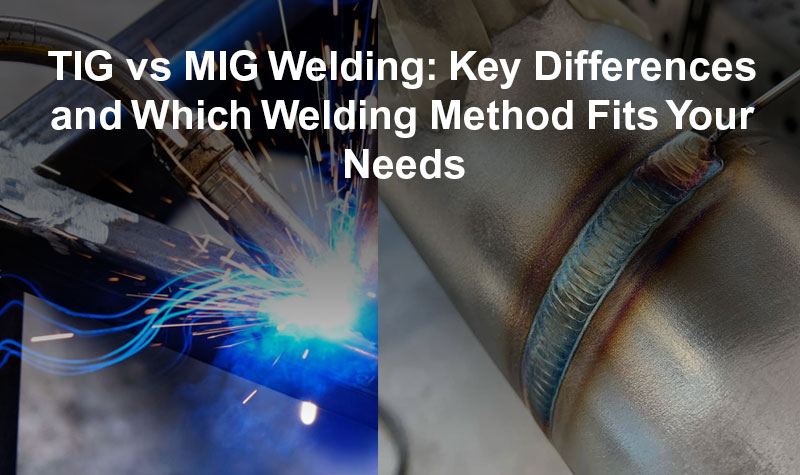
Choosing the right welding method can make a major difference in the strength, appearance, and efficiency of your work. Two of the most widely used welding processes today are TIG and MIG welding. At first glance, they may seem similar since both use an electric arc and shielding gas, but their techniques, applications, and results are very different. Understanding the difference between TIG and MIG welding helps you select the most suitable method for your project, saves time, reduces material waste, and improves weld quality. Superon supports welders across industries with reliable consumables that perform well with both methods, helping you achieve consistent results.
TIG vs MIG Welding: Key Process Differences
To understand the TIG and MIG welding differences, it is important to take a closer look at how each process works. MIG welding, also called Metal Inert Gas welding, uses a continuously fed consumable wire electrode. This wire melts into the joint and fills the gap between the metals. TIG welding, also known as Tungsten Inert Gas welding, uses a non-consumable tungsten electrode to create the arc. The filler material, if needed, is added separately by hand. While MIG welding allows one-handed operation, TIG welding requires more coordination because you hold the torch in one hand and the filler rod in the other. Shielding gas also works differently. MIG welding commonly uses a blend of argon and carbon dioxide to achieve deeper penetration on thicker metals. TIG welding relies mainly on pure argon or a mix with other inert gases to prevent contamination and achieve clean, controlled welds. MIG torches work well for fast and heavy welding jobs, while TIG torches are preferred when precision and heat control are important. Power sources differ as well. MIG typically uses DC current for stable arcs and penetration. TIG welding can use either AC or DC, depending on the metal type. This flexibility makes TIG the best option for tricky materials like aluminium.
Which Materials Suit Each Method?
Both processes can weld stainless steel, mild steel, aluminium, copper, titanium, and more. However, their strengths differ. TIG welding is ideal for thin and delicate materials because it produces narrow weld beads with minimal heat distortion. It is often used for stainless steel pipes, aluminium sheets, and components where aesthetic finish matters. MIG welding works best for thick materials and large projects. It provides deeper penetration and steady filler supply, making it suitable for construction, fabrication, and heavy equipment repairs. For mass production where speed is crucial, MIG welding is the preferred choice.
Advantages and Limitations of TIG Welding
TIG welding is known for producing clean, precise, and visually appealing welds. Because the filler rod is handled separately, welders can control bead width, material flow, and overall finish more accurately. TIG welding creates strong joints and works on almost all metals, especially thin and exotic alloys. However, it is slower and harder to learn. TIG welding requires steady hands, consistent technique, and careful heat control. Since the process is time-consuming, it is not often used for long or large welds. TIG equipment also costs more and needs regular maintenance.
Advantages and Limitations of MIG Welding
MIG welding delivers speed and efficiency. With a continuous wire feed and simpler operation, even beginners can achieve strong welds quickly. It is especially useful for thick materials, automotive work, structural fabrication, and heavy production environments. MIG welding also allows welding from difficult angles because one hand is free to support the workpiece. The main drawback is that MIG welds are usually less clean and have more spatter than TIG welds. It is harder to control bead appearance, and thin materials may burn through. While MIG welds are strong, they may require grinding or finishing depending on the application.
TIG and MIG Welding in Real Applications
The decision between MIG and TIG depends on your needs. In industries such as aerospace, medical equipment manufacturing, and precision engineering, TIG welding offers the accuracy and finish required for high-value components. In contrast, MIG welding is a common choice for construction, pressure vessel fabrication, automotive chassis work, and large repair jobs. MIG is perfect for long production runs, while TIG is perfect for detailed, small-scale, or visually important applications.
What Should You Choose for Your Project?
If you need fast output, deep penetration, and strong welds on thick metals, then MIG welding is the right choice. If your project demands finesse, clean beads, and superior control on thin or sensitive metals, TIG welding is the better option. Many workshops use both methods because they complement each other. Welders often choose MIG for heavy work and rely on TIG for finishing touches or specialised tasks. No matter which method you choose, Superon offers quality welding rods and wires that help you achieve professional results.