
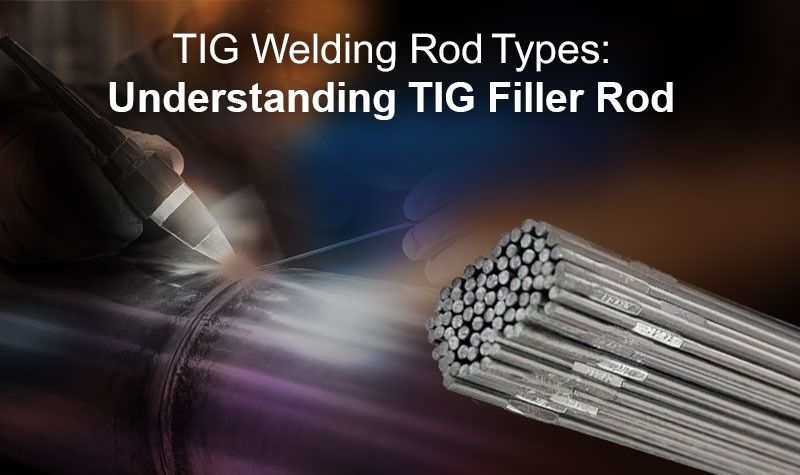
TIG welding is renowned for its precision, clean welds and ability to produce strong joints across a wide range of metals. Unlike MIG welding, which feeds wire automatically, TIG relies on a non-consumable tungsten electrode to create the arc, while the filler rod is added manually by the welder only when required. The selection of the right TIG filler rod types is crucial to achieving consistent weld quality, strength and corrosion resistance.
A properly chosen TIG welding rod ensures good fusion, reduces the likelihood of defectsand helps match the properties of the base metal. Selecting the wrong rod can compromise the weld, leading to weak joints, cracking or corrosion issues, especially in demanding industrial environments.
What Is a TIG Filler Rod?
A TIG filler rod is a metal rod introduced into the weld pool to supplement material and ensure full penetration and joint strength. The welder controls both the rod and the arc, allowing precise application. TIG welding allows for control over heat input, bead size and appearance, making it ideal for thin sections, visible welds or high-quality fabrications.
Key purposes of a TIG filler rod include:
- Filling gaps between components
- Increasing weld strength
- Maintaining corrosion resistance
- Reducing cracking risk
- Ensuring smooth, consistent weld bead appearance
While some thin materials can be welded without filler, most applications, particularly in structural, automotive or industrial contexts, require an appropriate TIG filler rod.
Why Choosing the Right TIG Welding Rod Types Matters
The selection of tig welding filler rod types is critical because it directly affects weld integrity, appearance and durability. Incorrect selection can result in:
- Weak joints due to poor fusion
- Cracking during or after cooling
- Corrosion near the weld, particularly on stainless steel
- Bead irregularities or discolouration
- Mismatch in mechanical properties with the base metal
Factors to consider when choosing a TIG filler rod include the type of base metal, material thickness, joint design, service conditions and any applicable job or code specifications. Using the correct rod ensures that the weld performs reliably over time.
Common TIG Filler Rod Types
Below is an overview of the most widely used TIG welding rod types and their typical applications.
1) Mild Steel TIG Filler Rods
These rods are primarily used for carbon steel and mild steel applications. They are versatile, affordable and suitable for general fabrication, maintenance and repair.
Typical uses:
- Structural frames and brackets
- General fabrication projects
- Low to moderate stress components
Advantages:
- Easy to handle and weld
- Compatible with clean workshop environments
Considerations:
- Surface contamination must be avoided
- Proper heat control is essential to prevent distortion
2) Stainless Steel TIG Filler Rods
Stainless steel TIG rods maintain corrosion resistance and mechanical strength. They are critical when welding food-grade, pharmaceutical or architectural components where appearance and durability are essential.
Applications include:
- Stainless steel piping, tanks and fittings
- Chemical or marine environments
- Decorative or exposed welds
Common grades:
- 308L: For welding 304 stainless steel, offering good corrosion resistance and low carbon content
- 316L: For marine or chemical exposure, with superior resistance to chlorides
- 309: Used to join stainless steel to mild steel or as a buffer layer for overlays
The selection of rod grade depends on the base metal, the service environment and the desired corrosion resistance.
3) Aluminium TIG Filler Rods
Aluminium welding requires careful preparation due to oxide layers and high thermal conductivity. Correct filler selection ensures strong, crack-resistant joints with a clean finish.
Applications include:
- Automotive and aerospace components
- Marine structures
- Lightweight frames and panels
Key considerations:
- Match filler to alloy series
- Clean and degrease the base metal
- Control heat input carefully to prevent warping
4) Nickel Alloy TIG Filler Rods
Nickel alloy rods are used when corrosion resistance, heat resistance or joining dissimilar metals is required. They are ideal for chemical, petrochemical and high-temperature industrial applications.
Applications:
- High-temperature service components
- Chemical processing equipment
- Dissimilar metal welding (stainless to nickel alloys)
Advantages:
- Reduces cracking risk
- Handles thermal expansion differences effectively
5) Copper and Bronze TIG Filler Rods
Copper and bronze rods are used for specialised applications, including brazing, wear-resistant layers and copper fabrication. Proper heat control and joint cleaning are crucial due to the high thermal conductivity of these metals.
Applications include:
- Copper plumbing and fittings
- Wear-resistant overlays
- Speciality metal assemblies
By understanding the characteristics, advantages and limitations of each TIG filler rod type, welders can select the most suitable rod for the base metal, joint design and service conditions. Proper rod selection ensures stronger joints, improved corrosion resistance and a cleaner weld finish, making it easier to achieve consistent, high-quality results across a variety of fabrication and repair projects.
Selecting TIG Welding Rod Types for a Job
To select the correct TIG welding filler rod types, consider the following factors:
1) Base Metal Compatibility
Identify the base metal first: mild steel, stainless steel, aluminium, nickel alloys or copper-based metals. The filler rod should match or be compatible with the base metal to maintain strength and corrosion resistance.
2) Service Environment
Determine where the welded part will be used: indoor, outdoor, high humidity, coastal exposure, chemical exposure or high-temperature service. The service environment affects rod choice, particularly for stainless or nickel alloys.
3) Material Thickness and Joint Design
- Thin materials require smaller-diameter rods, precise heat control and steady travel speed
- Thicker joints may require larger-diameter rods, multiple passes and controlled interpass temperatures
4) Appearance Requirements
If the weld is exposed, TIG is preferred for its control and aesthetics. Use the correct filler rod and gas coverage to achieve smooth, consistent beads and avoid overheating or discolouration.
5) Job Specifications and Codes
Follow welding procedure specifications if provided. These may include rod classification, shielding gas, current type and polarity, surface preparation and post-weld treatments. Compliance ensures quality and consistency.
Where Are TIG Filler Rods Commonly Used?
TIG filler rods are widely chosen for:
- Thin stainless steel sheet work
- Piping, tubing and pressure-sensitive joints
- Architectural welds where appearance is critical
- Aluminium structures requiring smooth, visible finishes
- Automotive and aerospace components needing precision welding
While TIG welding is slower than MIG or stick welding, the precise control and superior finish make it the preferred choice for high-quality fabrication and repair.
Conclusion
Selecting the right TIG welding rod types is crucial for achieving strong, durable and visually appealing welds. By understanding the properties and applications of mild steel, stainless steel, aluminium, nickel and copper filler rods, welders can ensure that joints meet both mechanical and environmental requirements. Correct filler rod selection depends on the base metal, material thickness, service conditions and job specifications. For stainless steel, the question What TIG rod for stainless? is answered by selecting the appropriate grade, typically 308L, 316L or 309, based on corrosion exposure and compatibility. Superon Technik's products and support provide reliable consumables that enable welders to achieve consistent TIG welds with optimal arc stability, fusion and surface finish across diverse fabrication and industrial applications.