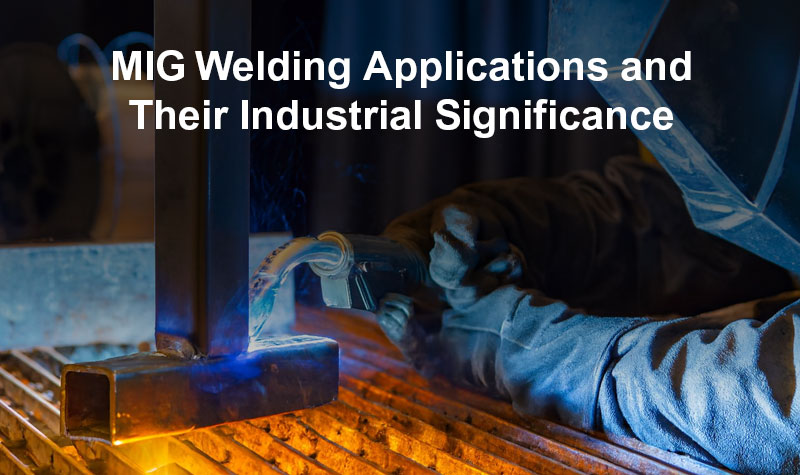
MIG welding has become one of the most widely used welding processes in modern industry, mainly because it offers a practical balance of speed, precision and efficiency. From automobile repair and sheet metal fabrication to large-scale steel construction, MIG welding delivers dependable results with consistent quality.
Across India, a wide range of industries rely on MIG welding applications to maintain productivity and meet strict fabrication standards. With carefully engineered superon welding consumables from Superon Technik, fabricators can achieve reliable, high-quality welds even in demanding operational environments.
What Is MIG Welding?
MIG welding, also known as Gas Metal Arc Welding, is a semi-automatic or automatic process that uses a continuously fed wire electrode and shielding gas to join metal components. The wire melts under the heat of an electric arc, forming a molten weld pool that solidifies into a strong, durable joint.
A shielding gas, such as carbon dioxide or an argon-based mixture, protects the weld pool from atmospheric contamination. This controlled environment helps produce clean welds with consistent penetration and reduced spatter. Because MIG welding uses a steady wire feed and regulated gas flow, it allows for precise control of both thin sheet metal and thicker sections.
Its ease of operation and high productivity make MIG welding a preferred choice across Indian manufacturing facilities, where efficiency and repeatability are essential. It is also well-suited for training new welders, enabling faster operational scaling without compromising quality.
Advantages Of MIG Welding In Industrial Manufacturing
MIG welding offers several clear benefits that make it a reliable solution for fabrication and production environments.
- High Welding Speed The continuous wire feed supports fast, uninterrupted welding, helping manufacturers improve output and meet production deadlines.
- Clean Weld Appearance The process produces relatively low spatter, reducing the need for excessive post-weld cleaning and delivering a neater finish.
- All Position Capability With suitable machine settings and technique, MIG welding can be carried out in flat, horizontal, vertical and overhead positions.
- Versatility Across Metals It can be used for a wide range of materials, including stainless steel, mild steel, aluminium, copper alloys and selected nickel-based metals.
- Ease Of Learning Operators can develop proficiency relatively quickly, making workforce training more efficient and improving shop floor consistency.
- Cost Efficiency Stable arc performance and reduced material wastage contribute to lower operational costs over time.
These qualities make MIG welding especially suitable for automotive plants, manufacturing units and metal workshops where performance, consistency and speed are equally important.
Key MIG Welding Applications Across Industries In India
MIG welding plays a significant role in several major industrial sectors. Its reliability and adaptability allow it to meet the practical demands of modern fabrication.
Manufacturing And Fabrication
In manufacturing environments, MIG welding is widely used for:
- Sheet metal welding
- Fabrication of pressure vessels
- Industrial equipment frames
- Steel structures and beams
- Containers, tanks and supports
For stainless steel fabrication work, Superon ER308L Stainless Steel MIG Wire is commonly used where corrosion resistance, a clean bead finish and structural reliability are essential, particularly in applications involving food-grade or chemical processing environments.
Manufacturers value MIG welding for its ability to deliver strong, uniform and repeatable welds, which are essential for maintaining product quality.
Automotive And Transportation
The automotive sector is a key user of MIG welding. Common applications include:
- Repairing vehicle components
- Fabricating frames and body panels
- Reassembling and reinforcing structural sections
- Joining different grades of metal
- Restoring worn surfaces
Its capability to join thin materials with precision makes it particularly suitable for auto body repair and structural reinforcement work.
Construction And Infrastructure
MIG welding is extensively used in large-scale construction projects such as commercial buildings and industrial structures. Typical applications include:
- Welding of structural beams and columns
- Reinforcement of metal frameworks
- Assembly of trusses and fabrication components
- On-site structural repairs
This process supports the creation of strong joints that contribute to the long term durability of structures when executed correctly.
Pipelines And Process Plants
In pipeline construction and process plants, MIG welding is used for:
- Joining pipeline sections and fittings
- Repairing worn or corroded surfaces
- Rebuilding structural components under continuous stress
The consistency of the process supports reliable performance in critical infrastructure applications.
Railways
Railway maintenance and fabrication facilities use MIG welding to repair and strengthen metal components such as coach structures, brackets and underframes. Its adaptability enables it to meet a wide range of repair and strengthening requirements.
Home Improvement And Small-Scale Fabrication
On a smaller scale, MIG welding is commonly used for:
- Gate and grill repairs
- Furniture fabrication
- Outdoor metal structures
- General repair and maintenance projects
Its relatively straightforward operation makes it accessible for skilled tradespeople and small business owners who require quality and reliability.
Types Of Metals And Materials Welded Using MIG Welding
MIG welding is compatible with a wide variety of metals, provided the correct wire and shielding gas are used. Selecting suitable MIG welding wire is crucial for achieving strong welds and consistent performance. Common materials include:
- Mild steel for structural and industrial fabrication
- Stainless steel for corrosion-resistant applications
- Aluminium for lightweight components and transport structures
- Copper alloys for specialised electrical and thermal applications
- Nickel and iron alloys for environments requiring enhanced durability
With controlled and proper current setting, MIG welding can handle thin sheets with control while also delivering sufficient penetration for heavier sections.
Understanding different MIG welding wire types and selecting the right MIG welding wire material ensures better arc stability, reduced defects and superior weld strength across applications.
MIG Welding Equipment And Consumables For Optimum Applications
A typical MIG welding setup includes:
- MIG welding machine
- Wire feeder
- Welding torch
- Shielding gas system
- Ground clamp and cables
- Personal protective equipment
Weld quality depends significantly on the consumables used. These include electrodes, contact tips, nozzles and shielding gases. Superon Technik supplies a comprehensive range of Superon MIG Wires and welding consumables designed to support stable arcs, smooth wire feeding and seamless bead formation across varied applications.
Best Practices For MIG Welding In Indian Industrial Environments
To achieve consistent and defect-free welds, welders should follow these practical guidelines:
- Clean the metal surface thoroughly before welding
- Maintain steady shielding gas flow.
- Keep the torch at the correct travel angle.
- Adjust the voltage and wire feed speed carefully.
- Use suitable PPE for operator safety.
- Maintain consistent torch movement.
- Avoid welding in windy outdoor conditions unless shielding is effective.
These practices improve weld integrity and overall operational efficiency.
Innovations And Trends In MIG Welding Technology
The MIG welding process continues to evolve, driven by the need for higher productivity and improved control. Emerging trends include:
- Robotic MIG welding for precision manufacturing
- Increased automation in fabrication facilities
- Energy-efficient equipment with digital controls
- Enhanced arc stability technologies
- Eco-friendly consumables and accessories
These advancements help reduce wastage, improve productivity and support better quality control in industrial environments.
Why Choose Superon Technik For MIG Welding Consumables In India?
Superon Technik is recognised for supplying welding consumables that meet the practical needs of Indian fabricators. Superon MIG Wires and related products are designed to deliver reliable feeding, consistent arc stability and clean weld appearance when used as recommended.
With a strong focus on stainless steel welding consumables and easy product availability across India, Superon Technik supports a broad range of industries, including automotive, construction and manufacturing. Fabricators value Superon products for their dependable performance and consistent quality in real working conditions.