Arc welding is a key technique in industrial fabrication. From construction sites to automotive workshops, it is a reliable method for joining metals efficiently and permanently. Across India’s industrial landscape, arc welding is an essential skill for producing strong steel structures, machinery, and custom metal products. Its versatility, affordability, and adaptability make it suitable for a wide range of applications.
This blog explains what arc welding is, how it works, the five most popular types used in industry, factors to consider when choosing a welding process, safety precautions, and frequently asked questions.
Understanding Arc Welding and How the Process Works?
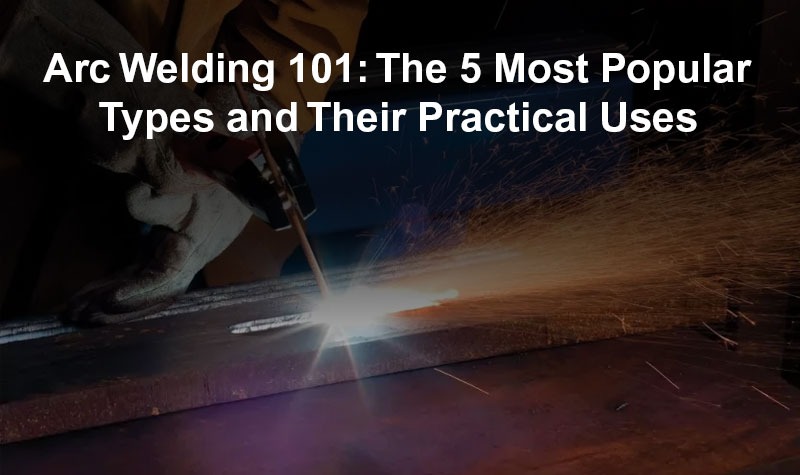
Arc welding uses an electric arc to generate heat, melting base metals and a filler material to create a strong joint. Electricity flows between an electrode and the metal surface, producing an arc with temperatures high enough to fuse the metals together.
The concentrated heat allows precise melting and joining of metals. Arc welding works with a wide range of metals, thicknesses, and environmental conditions. It is suitable for mild steel, stainless steel, and aluminium, making it a flexible choice for industrial fabrication in India.
Arc welding provides strong mechanical properties, making it suitable for structural applications such as bridges, pipelines, and machinery. Its ability to function in both factory and outdoor environments has made it one of the most trusted welding techniques in the Indian manufacturing sector.
The 5 Most Popular Types of Arc Welding
Arc welding is available in several forms, each with distinct benefits, limitations, and applications. The following are the five most widely used types of Arc welding:
1. Shielded Metal Arc Welding (SMAW / Stick Welding)
SMAW, or stick welding, uses a consumable electrode coated with flux. The electrode melts to form the weld and releases gases that protect the molten metal from contamination.
SMAW is versatile and works well outdoors, making it ideal for construction, repair work, and heavy steel structures. Its main advantages are simplicity, portability, and effectiveness on thick materials. It produces slag that must be removed and is slower than other methods, such as MIG or SAW, but it remains widely used in India due to its reliability and cost-effectiveness.
2. Gas Metal Arc Welding (GMAW / MIG Welding)
MIG welding uses a continuous fed wire electrode and shielding gas to prevent contamination. It produces clean, high-quality welds with minimal post-weld cleaning.
This method is ideal for high-volume production environments such as automotive manufacturing and fabrication plants. MIG welding is fast, consistent, and easy to automate. While it requires a controlled environment due to the shielding gas, it delivers excellent results on both mild steel and stainless steel. In India, MIG welding is often chosen for projects requiring both speed and precision.
3. Gas Tungsten Arc Welding (GTAW / TIG Welding)
TIG welding is a precision welding technique that uses a non-consumable tungsten electrode. Filler material is added separately, allowing highly controlled and clean welds.
TIG welding produces strong and visually superior joints, making it suitable for stainless steel, aluminium, and high-performance alloys. Applications include decorative railings, premium furniture, aerospace components, and specialised machinery. TIG welding requires skilled operators and can be slower than MIG or SMAW, but the quality and finish make it indispensable where aesthetics and strength are important.
4. Flux-Cored Arc Welding (FCAW)
FCAW uses a tubular wire filled with flux that generates protective gases as it melts. This makes it effective in outdoor conditions where wind and other environmental factors could disrupt other welding methods.
FCAW is fast, productive, and suitable for construction, heavy equipment, and structural steel projects. It combines the advantages of stick welding with the speed and efficiency of MIG welding. FCAW is widely adopted in India for projects that demand durability and outdoor usability.
5. Submerged Arc Welding (SAW)
SAW uses a blanket of flux to cover the weld, reducing arc, spatter, and harmful fumes. The flux stabilises the arc and improves weld quality.
This method is highly productive and ideal for thick plates and large-scale industrial projects. SAW is used in shipbuilding, structural steel fabrication, and heavy machinery manufacturing, where speed and weld strength are essential. It requires specialised equipment and a controlled setup, but the efficiency and quality benefits are significant.
Key Factors to Choose the Right Arc Welding Process
The right welding method depends on several considerations:
- Material type: The type and thickness of metal determine the suitable welding process. TIG works best for thin and precise applications, while SMAW and FCAW handle thicker metals efficiently.
- Precision requirements: TIG produces clean, high-quality welds. MIG and SMAW offer efficiency for joints where appearance is less critical.
- Production volume: MIG and SAW suits large-scale industrial operations due to speed and automation capabilities.
- Environmental conditions: Outdoor work is suited to SMAW or FCAW, while indoor conditions can use MIG or TIG for cleaner results.
- Cost considerations: Equipment, consumables, labour, and training must be balanced with project requirements.
Understanding these factors helps manufacturers select the most efficient and cost-effective Arc welding process for their projects.
Safety Precautions in Arc Welding
Safety is a priority for all welding operations. Key precautions include:
- Personal protective equipment (PPE): Wear helmets, gloves, flame-resistant clothing, and safety boots to prevent burns, UV radiation, and injuries from arcs.
- Ventilation: Ensure proper airflow or fume extraction to avoid inhaling harmful gases and smoke.
- Electrical safety: Regularly inspect cables and equipment to prevent shocks and short circuits.
- Workspace organisation: Keep areas free of flammable materials and maintain cleanliness to reduce fire hazards.
Following these safety measures ensures welders are protected, and production is not disrupted.