In fabrication, maintenance and repair work, welding is not always about joining metals. In many situations, metal needs to be removed to correct defects, prepare joints or dismantle components. Conventional cutting methods can be slow or ineffective, especially on thick or hard materials. This is where air carbon arc gouging becomes an essential process. Known for its speed, flexibility and control, this method is widely used across industries to remove metal efficiently while maintaining accuracy and productivity.
What Is Air Carbon Arc Gouging
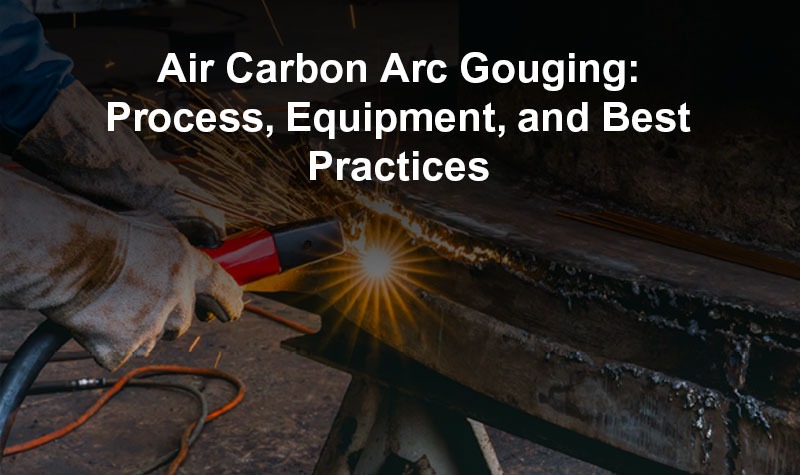
Air carbon arc gouging is a metal removal process that uses an electric arc to melt metal while a jet of compressed air blows the molten material away. The process relies on heat rather than oxidation, making it suitable for a wide range of metals.
A carbon electrode is used to strike an arc between the electrode and the workpiece. As the metal melts, the compressed air removes it from the surface, forming a clean groove. This method is commonly used for removing defective welds, preparing joints and back-gouging before re-welding.
How the Process Works
The process begins by striking an arc between the carbon electrode and the metal surface. Once the arc is stable, compressed air flows along the electrode. The intense heat melts the metal, while the air jet clears the molten material from the gouge.
The operator controls the gouge depth and width by adjusting the electrode angle, current setting and travel speed. This allows precise metal removal without damaging surrounding areas. Air carbon arc gouging is particularly effective on thick materials and in applications where speed and control are critical.
Equipment Required for Air Carbon Arc Gouging
Several essential components are needed to perform air carbon arc gouging safely and effectively.
- A constant current power source capable of delivering high amperage
- Carbon or graphite electrodes designed specifically for gouging
- A reliable compressed air supply with adequate pressure
- An electrode holder with integrated air channels
- Personal protective equipment suitable for high-heat operations
The quality of electrodes has a direct impact on performance. Superon Technik provides carbon-gouging electrodes that offer stable arc behaviour, consistent metal removal and reduced electrode consumption. These features help improve productivity and control in demanding industrial applications.
Materials Suitable for Gouging
Air carbon arc gouging can be used on both ferrous and non-ferrous metals. It is commonly applied to carbon steel, stainless steel and cast iron. The process is also effective on aluminium, copper and other non-ferrous alloys.
Because it does not depend on oxygen, air carbon arc gouging can be used in environments where oxy-fuel cutting is not practical. This makes it a versatile solution for workshops, shipyards and heavy fabrication facilities.
Advantages of Air Carbon Arc Gouging
This process offers several practical advantages that make it widely used in fabrication and repair work.
- Rapid and efficient metal removal
- Effective on thick and hard materials
- Suitable for a wide range of metals
- Can be used in various welding positions
- Allows good control over gouge size and shape
These benefits make air carbon arc gouging ideal for weld removal, joint preparation and repair applications where time and accuracy are important.
Common Applications
Air carbon arc gouging is commonly used in applications where precise and efficient metal removal is needed to support quality welding and repair work.
- Removing defective or cracked welds to prepare surfaces for re-welding and ensure joint integrity
- Back gouging welded joints to achieve full penetration and improve overall weld strength
- Preparing joints in thick metal sections where conventional cutting methods are less effective
- Removing excess metal from castings and fabricated components to achieve proper fit and finish
- Cutting and dismantling heavy structural parts during repair or modification work
- Supporting maintenance operations in shipbuilding, construction and heavy engineering industries
These applications show how air carbon arc gouging supports accuracy, efficiency and reliability in industrial fabrication.
Best Practices for Effective Gouging
Following correct techniques helps achieve better results and reduces rework.
Selecting the correct electrode size is essential. The electrode should match the required current range and gouge depth. Maintaining a consistent electrode angle ensures proper air flow and smooth metal removal. Travel speed should be steady to avoid uneven grooves or excessive surface damage.
Superon Technik carbon gouging electrodes are designed to provide smooth arc stability and reliable air flow. This helps operators maintain consistent performance while reducing downtime caused by electrode wear.
Safety Considerations
Safe operation is essential when performing air carbon arc gouging due to the heat, noise and sparks involved.
- Wear appropriate personal protective equipment, including gloves, face shields and flame-resistant clothing
- Use hearing protection to reduce exposure to high noise levels
- Ensure proper ventilation to manage fumes and airborne particles
- Keep the work area clear of flammable materials
- Inspect compressed air systems and equipment regularly
Proper training and awareness play a key role in reducing risks and ensuring safe working conditions.
Limitations of Air Carbon Arc Gouging
While the process is highly effective, there are some limitations to consider.
- Produces rough surfaces that may require additional grinding
- Generates high noise and sparks, limiting use in confined areas
- Not suitable for applications requiring fine cutting accuracy
- Requires skilled handling for consistent results
Understanding these limitations helps ensure the process is used where it delivers the most value.
Conclusion
Air carbon arc gouging is a powerful and versatile metal removal process used across fabrication, construction and repair industries. Its ability to remove metal quickly, handle thick materials and work on a wide range of metals makes it an essential technique in many applications. By understanding the process, selecting the right equipment and following best practices, operators can achieve efficient results while maintaining safety and control. When applied correctly, air carbon arc gouging supports better weld preparation, reduces rework and improves overall productivity.