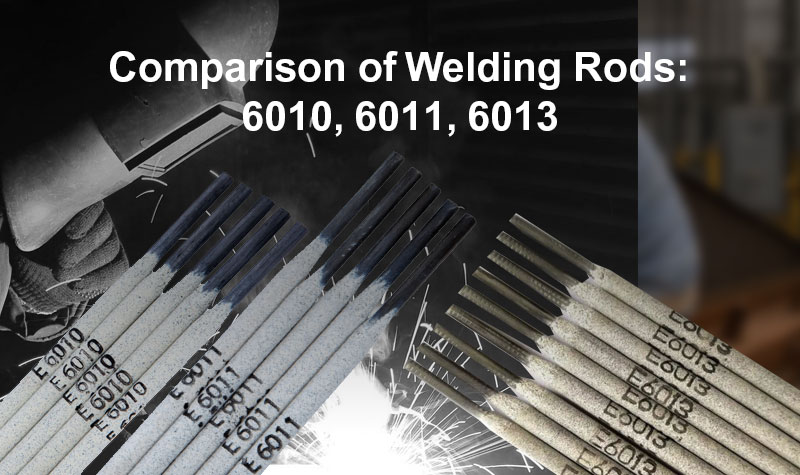
Choosing the right welding electrode from a reliable welding electrode manufacturer is essential for achieving strong, clean, and durable welds. Among the many available rods, the 6010, 6011, and 6013 electrodes are some of the most popular choices for both commercial and general fabrication work. Each rod offers unique benefits, making it suitable for specific applications, metal conditions, and skill levels. In this detailed comparison, we will break down the features, usage, and performance of these electrodes to help you choose the one that best fits your welding needs. This guide will also help readers searching for 6011 vs 6013 welding rods, or 6011 vs 6013 vs 7018, by simplifying the differences in an easy, practical way. Superon Technik supports welders across industries with high-quality electrodes designed for precision and reliability.
Understanding the Three Common Welding Rods
The 6010, 6011, and 6013 welding rods may look similar at first glance, but they behave very differently when used. Any experienced welding electrode manufacturer will tell you that each of these rods is designed for specific applications, penetration levels, and current types, which is why choosing the right one makes a significant difference in weld quality and performance. Their flux composition, current compatibility, penetration levels, and arc characteristics set them apart.
6010 Welding Rod
The 6010 electrode is known for its fast-freezing weld metal that solidifies quickly. This helps welders make strong vertical and overhead welds with excellent control. The rod is recognised for its deep penetration, which makes it ideal for welding dirty, rusted, or painted surfaces. However, the 6010 rod can only be used with DC and requires more skill to handle due to its tight and forceful arc.
6011 Welding Rod
Like the 6010, the 6011 weld rod is also a fast-freezing electrode and offers strong penetration. It has the advantage of working with both AC and DC currents, making it more versatile. The 6011 rod performs well on rusty, contaminated, and coated metals. It is widely used for general repair work, sheet-metal welding, and welding farm or outdoor equipment.
6013 Welding Rod
The 6013 electrode is the easiest of the three to use. It produces smooth welds with minimal spatter and a softer arc. This makes it perfect for beginners, light fabrication, and projects where appearance matters. However, it has lower penetration compared to 6010 and 6011, so it is best used on clean or lightly rusted metal surfaces.
Applications of 6010, 6011, and 6013 Rods
Each electrode serves different purposes depending on the project type and welding conditions.
-
6010 Applications
The 6010 rod is widely used in pipeline welding for root passes because the slag is easy to remove. Welders often use it for general fabrication, shipbuilding, and repair work that requires deep penetration. It is also suitable for welding dirty or painted metals.
-
6011 Applications
The 6011 electrode is used in automotive repairs, structural welding, and heavy equipment maintenance. Its ability to run on AC or DC makes it a convenient option for welding machines of all types. It works well on galvanised steel, farm machinery, and construction projects.
-
6013 Applications
The 6013 rod is ideal for welding metal sheets, equipment parts, and multi-pass welds. It is commonly used in HVAC, light construction, and small fabrication shops. Its clean appearance and medium penetration make it suitable for projects where weld aesthetics matter.
Key Differences Between 6010, 6011, and 6013
Understanding the differences helps welders choose the right electrode for the job.
| Category | 6010 | 6011 | 6013 |
| Current Compatibility | DC+ only | AC and DC+ | AC, DC+, DC− |
| Penetration Level | Deep | Deep | Shallow–medium (best for thin metal) |
| Ease of Use | Most challenging; requires skill | Moderate difficulty | Easiest; beginner-friendly |
| Metal Surface Condition | Works on painted or rusted metal | Excellent on dirty, oily, or rusted surfaces | Best on clean or lightly rusted metal |
| Spatter & Arc Quality | Tight, forceful arc; thin spatter | Strong arc; flaky spatter | Smooth arc; minimal spatter |
| Flux Composition | Cellulose sodium | Cellulose sodium | Rutile potassium |
| Storage Needs | Easy to store | Easy to store | Needs more careful moisture control |
| Tensile Strength | 60,000 psi | 60,000 psi | 60,000 psi |
Choosing the Right Electrode
To select the best electrode for your project, consider these points:
- Type of metal surface
Dirty or rusted surfaces require 6010 or 6011, while clean surfaces work well with 6013. - Welding position
6010 and 6011 are excellent for vertical and overhead welding, while 6013 works well for flat and horizontal welds. - Skill level
Beginners do better with 6013, while experienced welders can handle 6010 and 6011. - Equipment compatibility
Check whether your machine supports AC, DC, or both. - Depth of penetration needed
For thick metals, 6010 and 6011 are better, and for thin metals, 6013 is more suitable.
Conclusion
The 6010, 6011, and 6013 welding rods each offer unique features, strengths, and ideal uses. Understanding these differences helps welders choose the right electrode for the job, whether they need deep penetration, ease of use, or clean-looking welds. Whether you are comparing 6011 vs 6013 welding rods or exploring the differences in 6011 vs 6013 vs 7018, the choice depends on the project requirements and skill level.